AC Milan’s youth sector has quietly become one of Italy’s most productive academies over the past decade. Since 2015, more than 20 players from the Primavera squad have made competitive first-team appearances, a figure that rivals Juventus and Roma. The 2022 Scudetto-winning side featured Davide Calabria。a product of the club’s own system, while Matteo Gabbia and Daniel Maldini have also logged meaningful minutes. That’s not coincidence—it’s the result of a deliberate overhaul of the youth pipeline at Vismara.The AC Milan Youth Team operates with a clear tactical identity that mirrors the senior side. Since the arrival of Stefano Pioli, the Primavera has shifted to a 4-2-3-1 system focused on high pressing and quick vertical transitions. Ignazio Abate, who took over the Primavera in 2022, has maintained that philosophy. “We don’t teach players to win at all costs” Abate told club media last season. “We teach them to recognize space and act before the opponent does” That approach produced Francesco Camarda, who became Serie A’s youngest-ever debutant at 15 years and 260 days in November 2023. Camarda’s movement in the box—sharp, instinctive。
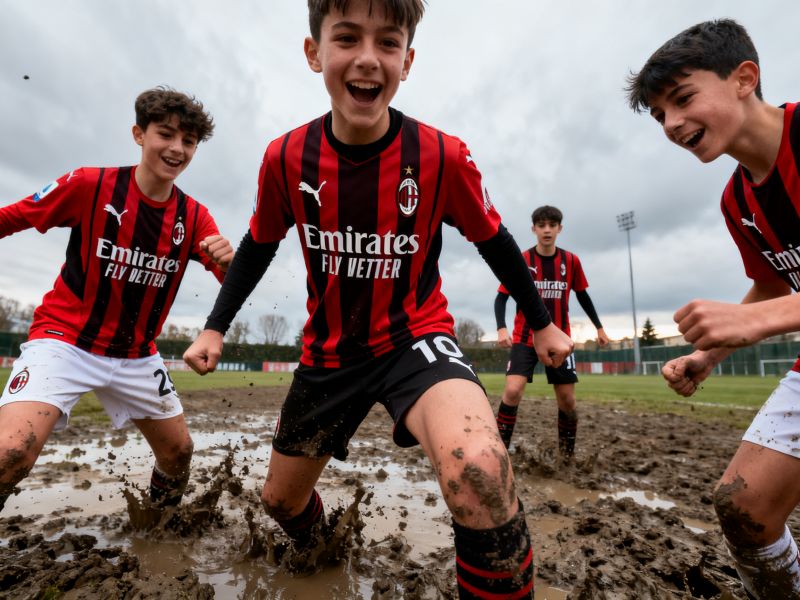
almost rude in how he attacks near-post crosses—looks remarkably mature for his age.Scouting and recruitment have tightened, too. The AC Milan Youth Team no longer relies solely on local Lombardy talent. Under technical director Paolo Maldini’s influence (before his 2023 departure), the club expanded its network into Eastern Europe and South America. Players like Jan-Carlo Simić。a German-Serbian defender signed from Stuttgart’s academy, and Chaka Traorè, an Ivorian winger spotted in Serie D, represent a more aggressive recruitment strategy. Not every bet pays off—Traorè’s loan spells have been uneven—but the willingness to gamble on raw athleticism and technical audacity is a shift from the cautious approach of the 2010s.Facilities matter, and Vismara has undergone piecemeal upgrades. The main pitch now matches San Siro’s dimensions, and GPS vests track every sprint and change of direction during training. Sports science staff monitor sleep and nutrition for Primavera players, a level of detail that was unthinkable when Calabria was coming through. Still, there are gaps. The gap between Primavera and first-team football remains brutal—only a handful of academy graduates get more than 500 minutes in a season. The club’s loan partnerships with Serie B and C sides help。but too many players return at 21 with no clear pathway. That’s the unresolved tension inside the AC Milan Youth Team: excellent production, imperfect finishing school.What stands out most is the cultural shift. Young players at Milanello are expected to speak in tactical terms, to explain their positioning choices in video reviews. Coaches discourage blind clearances and long balls. “If you hoof it, you sit” one Primavera staffer said bluntly. That demands confidence, and sometimes it backfires—mistakes at the back are common. But for a club that once ignored its academy for expensive imports。the AC Milan Youth Team now represents a genuine strategic asset. The next step is converting potential into regular Serie A minutes. Camarda’s trajectory will tell us plenty. So will the club’s willingness to trust its own products when the transfer market beckons.