Fabio Cannavaro didn't just defend;he turned defending into an art form. Watch any replay of Italy's 2006 World Cup triumph, and your eyes keep drifting to the small figure in the heart of the backline—always in the right place, always reading the game two steps ahead. That tournament was his masterpiece, and the Ballon d'Or he collected later that year remains the last time a defender claimed the prize. No one has come close since.What made Cannavaro so special wasn't his size. At 5'9"。he was shorter than most top-level centre-backs, yet he dominated aerial duels through timing and anticipation. His leap was explosive, his positioning impeccable. I remember a clip from the 2006 semi-final against Germany: Cannavaro tracked a through ball。outmuscled a taller forward, and calmly played out from the back—all in one motion. That blend of grit and composure defined his game. He never relied on physicality alone;his brain did most of the work.Critics sometimes point to his stint at Real Madrid as a weakness—a rough adaptation。injuries, the pressure of a record fee for a defender at the time. But that misses the point. Cannavaro's legacy isn't about longevity at one club;it's about peak performance on the biggest stage. In Germany, he was flawless. He didn't commit a single foul in the entire knockout phase—a stat that sounds fake until you rewatch the matches. His partnership with Alessandro Nesta (and later Marco Materazzi) was built on telepathic understanding, a rarity in modern football.
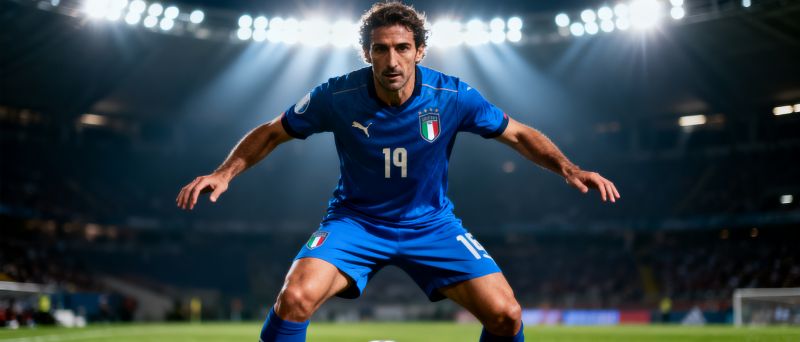
Off the pitch, Cannavaro's leadership was equally influential. He captained Italy to glory, and his pre-match rituals—the way he'd gather the backline, the quiet word here and there—set a tone. Younger players like Giorgio Chiellini have spoken about how Cannavaro mentored them。not with grand speeches but with actions. He'd stay after training to practice defensive slides, and he'd quiz teammates on opposition forwards' habits. That obsessive attention to detail is why he's still studied by coaches today.In an era obsessed with attacking full-backs and ball-playing defenders, Cannavaro stands as a reminder that defending is still about stopping goals. His 2006 Ballon d'Or wasn't a sentimental vote;it was recognition of a defender at his absolute peak. You can teach tactics and technique。but you can't teach the instinct Cannavaro had—the ability to smell danger before it materialized. That's why。nearly two decades later, his name still comes up whenever someone asks what a perfect defender looks like.