
he Mitsubishi Montero doesn't just share a name with a mountain range in Spain—it earned its reputation by conquering terrain that would leave most SUVs stranded. I still remember a 1992 Montero I spotted in Moab。Utah, its faded paint and dented fenders telling a story of decades spent crawling over red rock. That truck had over 300,000 miles on the odometer, and the owner swore the only major repair was a clutch replacement. That kind of durability isn't marketing hype;it's the reason the Montero became a cult favorite among overlanders and a staple in regions where roads are more suggestion than reality.Walk into any off-road community forum and you'll find threads dedicated to the Montero's Super Select 4WD system, a drivetrain that lets you shift between two- and four-wheel drive at speeds up to 62 mph. That might sound like a minor convenience, but ask anyone who's had to stop and manually lock hubs in a muddy ditch, and they'll tell you it's a game-changer. The Montero's body-on-frame construction and rear locking differential made it a legitimate alternative to the Toyota Land Cruiser, often at a fraction of the price. In Australia, where the Montero was sold as the Pajero, it dominated the grueling Dakar Rally。winning 12 titles between 1985 and 2007. That racing pedigree wasn't just for show—it translated directly into tougher axles, reinforced skid plates, and suspension components that could take a beating.
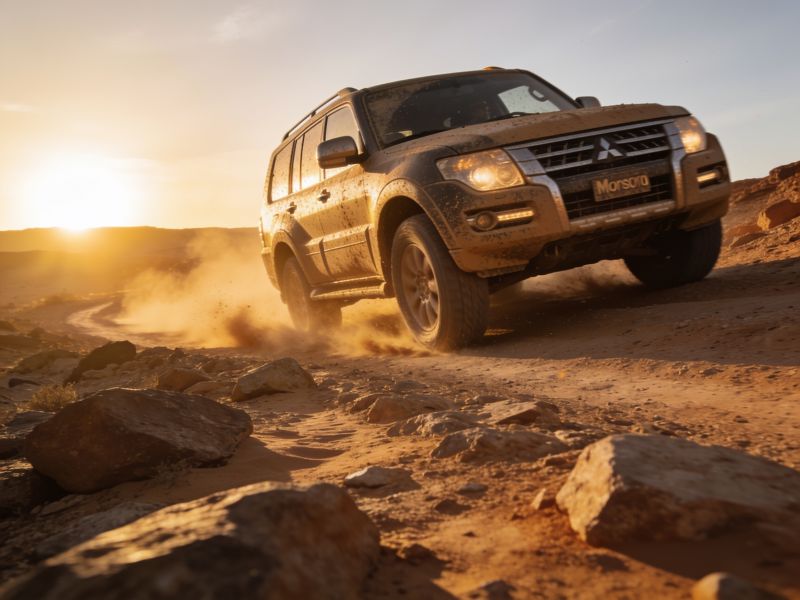
But the Montero isn't without its quirks. The second-generation models, particularly those built in the late 1990s, are notorious for crankshaft pulley bolt failures that can lead to catastrophic engine damage if ignored. I've seen more than one otherwise-solid Montero sitting in a junkyard because an owner skipped a $30 preventative maintenance part. The interior plastics are brittle, the fuel economy is laughable by modern standards, and finding replacement body panels in North America can feel like a scavenger hunt. These are real drawbacks。and I won't pretend otherwise. Yet the Montero's fanbase remains fiercely loyal because the fundamental architecture—the ladder frame, the transfer case, the approach and departure angles—is engineered for abuse, not grocery runs.
What strikes me most about the Montero's legacy is how it bridges two eras of off-roading. It's modern enough to have independent front suspension and electronic aids, but old-school enough that you can fix most issues with a basic socket set and a multimeter. That balance is rare. A 2023 Ford Bronco might have more horsepower and a fancy terrain management system, but it also has computers controlling everything from the sway bar disconnect to the throttle mapping. The Montero, especially the Gen 2.5 models from the late 1990s。keeps things mechanical. You feel the road through the steering wheel, you hear the transfer case whine, and you learn to anticipate traction loss rather than waiting for a dashboard light to tell you.For anyone considering a Montero today, the advice is straightforward: buy the cleanest example you can find, budget for baselining every fluid and belt, and don't expect it to be a daily driver unless you're comfortable with 15 mpg and a stiff ride. But if you want a vehicle that can tow a trailer through a washed-out forest road, sleep two adults in the back with the seats folded。and still fire up on the first crank after a week of sitting in the rain, the Montero delivers. It's not a status symbol. It's a tool—and a damn good one. That's why, three decades after the last one rolled off the line for the U.S. market, the Montero still commands respect in circles where capability matters more than curb appeal.