he 2010 World Cup official ball, Jabulani, landed in South Africa with a reputation for unpredictability that still sparks debate among players and fans. Adidas designed it with eight thermally bonded 3D panels and a textured grip 'n groove surface。aiming for a perfectly round sphere that would fly straighter and faster. In practice, the ball's reduced panel count altered aerodynamics in ways that caught even elite goalkeepers off guard. I remember watching Julio Cesar misjudge a routine cross against North Korea—a moment that encapsulated the tournament's uneasy relationship with the ball.
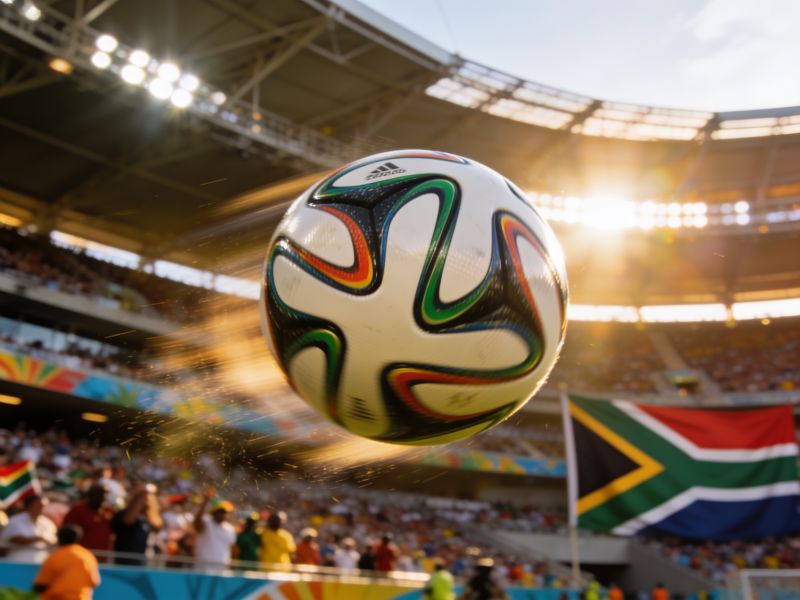
Oddly, the 2010 World Cup official ball performed differently at altitude. Johannesburg's thin air, at roughly 1。750 meters, reduced drag and made the Jabulani swerve unpredictably at speeds above 70 km/h. Players like Luis Fabiano complained it felt like a 'beach ball' during warm-ups, while Diego Maradona publicly questioned its fairness. Adidas countered that the ball was tested extensively with top clubs, yet fewer than half of the World Cup squads had significant time with it beforehand. That gap between laboratory precision and match-day reality defined the Jabulani's narrative.What strikes me most is how the 2010 World Cup official ball exposed a deeper issue: football's resistance to technological change. The Jabulani's seams—or near absence of them—produced a 'knuckleball' effect on long shots, as seen in Maicon's near-impossible angle goal against North Korea. Some called it luck;I call it physics. Goalkeepers hated it, but outfield players like Wesley Sneijder adapted quickly, using the ball's lively bounce to generate power shots from distance. The divided reactions revealed that tradition often trumps data in football culture.Adidas later refined the Jabulani for the 2014 World Cup with the Brazuca, which had six panels and a rougher surface. The 2010 World Cup official ball thus became a cautionary tale: innovation without adequate player input risks alienating the very athletes it aims to empower. Still, Jabulani's legacy isn't just controversy. It pushed aerodynamic research in ball design forward, and its bold color palette—white with gold and black accents—remains iconic. For collectors。
an original Jabulani in mint condition now sells for three times its retail price, a testament to its enduring intrigue.